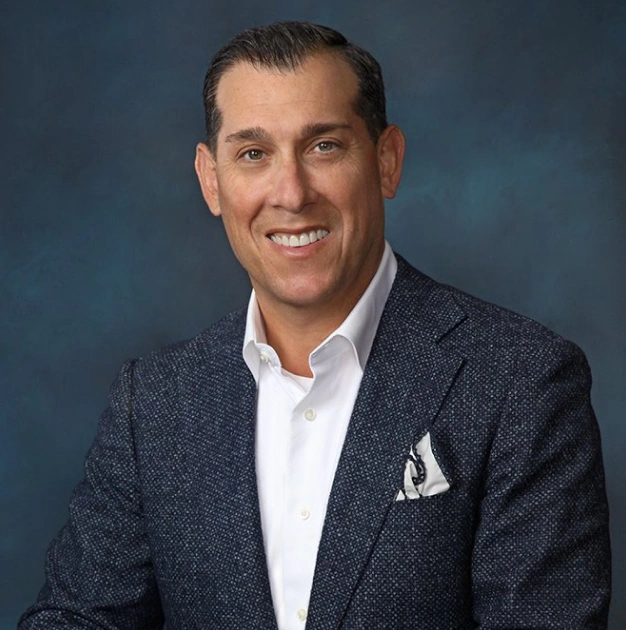
Dr. Dave has founded two companies, and both began the same way — as an unglamorous, recurring problem he watched play out in his own operatory for years before deciding to solve it directly rather than work around it.
Functional oral care, reimagined as a habit people already have.
The problem. After years of treating patients, Dr. Dave kept encountering the same pattern: people genuinely wanted healthy mouths but didn't consistently follow through on brushing and flossing. He came to see that as a failure of the tools available to patients — not a failure of willpower.
The question that started it. As he's described it, the idea began with a simple question he asked himself: what's the laziest thing somebody can do for their oral health? The answer — chewing gum is a habit people already have and genuinely enjoy — became the starting point for a functional gum engineered to do real clinical work, not just freshen breath.
What it is. RevitaBite combines xylitol, hydroxyapatite, and MCT oil in a liquid-center gum formula, selected to help reduce cavity-causing bacteria, support enamel remineralization, and rebalance the oral microbiome between visits. Dr. Dave connects this directly to his broader clinical view that oral microbiome health carries downstream effects for overall systemic health.
His role. Dr. Dave founded RevitaBite and serves as its clinical face — the practicing dentist whose expertise and judgment the product is built around, and whose name carries real weight with patients and colleagues. He's not the manufacturer; production and day-to-day operations sit with the broader RevitaBite team. His stake is in the company itself and in the clinical case for the product, not the factory floor.
He's been candid about the tradeoffs of the category: manufacturing a liquid-center functional gum is complex and costly relative to standard gum, which is why RevitaBite is positioned as a premium product rather than a mass-market one.
Visit RevitaBite →Treatment presentation software that helps patients say yes — and shows practices exactly why they don't.
The problem. A well-built treatment plan and a treatment plan a patient actually accepts are not the same thing. Dr. Dave has made this point throughout his teaching career — including his July 2026 San Diego County Dental Society talk: case acceptance usually breaks down in the conversation, not in the clinical judgment behind it. Most dentists are trained extensively in the science and barely at all in how to present it — and once a patient walks out, most practices have no real data on why a plan didn't get signed.
The company. Dr. Dave founded TreatPath, now running in beta with Coastal Dental Arts as its first live practice. It takes the case-acceptance framework he teaches other dentists — comprehensive treatment planning, communication tailored to how a specific patient processes information, and a structured, repeatable approach to presenting treatment — and builds it into software, rather than something a dentist has to attend a seminar to absorb secondhand.
For patients: a plan they can actually follow. A staff member uploads a photo of the practice's existing treatment plan, and TreatPath's AI reads it and translates procedure codes and clinical jargon into plain English automatically. Insurance coverage is calculated per procedure in real time. The patient then reviews, customizes, and signs the plan on an iPad in the chair — presented in one of four adaptive styles mapped to DISC personality types, the same behavioral framework from Chotiner's own CE lectures, so a direct, numbers-first patient and a patient who needs a calmer, step-by-step walkthrough each see a version built for how they actually process a decision.
For dentists: the data chairside skill alone doesn't give you. Every plan — signed or not — feeds a case-analytics dashboard that breaks down acceptance rate by treatment tier and by DISC style, tracks average case value, and surfaces the pattern in plain English. On Chotiner's own dashboard, for instance, that kind of analysis surfaced a roughly 30-point acceptance gap between his most direct-personality patients and his most analytical ones — the sort of thing a practice would otherwise have no way to see, let alone act on.
The goal. Change the dentist-patient conversation itself, so patients say yes more often to treatment they genuinely need — not through pressure, but because the plan was communicated in a way that actually made sense to them, and so practices can see precisely where that conversation is breaking down instead of guessing.
"We went from patients asking to think about it to signing in the chair. TreatPath changed how we present treatment completely." Dr. David Chotiner, Coastal Dental Arts — Beta Partner PracticeVisit TreatPath →